
Architectural Tensile
Membrane Structures
Bangalore's leading tensile membrane structure specialist. We engineer and install world-class PTFE, PVC, and ETFE membrane roofing systems for landmark buildings and large public spaces.
- PTFE, PVC & ETFE Membrane Systems
- 25+ Year Lifespan with PTFE Membrane
- IS Code Certified Structural Engineering
Get Your Free Quote
Why Choose Our Membrane Structures?
Tensile membrane structures represent the cutting edge of modern architecture — lightweight, beautiful, energy-efficient, and built for extreme longevity.
25+ Year Lifespan
PTFE membrane structures are designed for extreme longevity — the Sydney Opera House and many airport terminals worldwide use PTFE membranes that have performed for 30+ years without replacement.
Natural Light Diffusion
Membrane structures filter and diffuse natural daylight beautifully, reducing artificial lighting needs by up to 40%. ETFE membranes can be completely transparent for maximum daylighting.
Sustainable & Self-Cleaning
PTFE and Ferrari PVC membranes are self-cleaning in rain, require no painting, and use significantly less material than conventional roofing — making them an excellent sustainable choice.
Tensile Membrane Structure Applications
We specialise in engineering and installing tensile membrane structures for high-specification architectural and commercial projects across Bangalore and India.
Airport & Transit Hub Membranes
Large-span PTFE membrane roofing for airport terminals, metro stations, and bus terminuses — providing iconic architectural form with exceptional durability and natural light.
Shopping Mall Atrium Roofing
ETFE and PVC membrane systems for shopping mall atrium roofs — creating bright, airy shopping environments with dramatic architectural ceilings that attract customers.
Stadium Roof Membrane Systems
Large-span tensile membrane roofing for cricket and football stadium grandstands — protecting thousands of spectators while creating world-class sporting venues.
Public Space & Civic Membranes
Membrane canopies for public plazas, amphitheatres, community centres, and civic spaces — creating landmark structures that serve the community for decades.
Commercial Complex Membrane Project
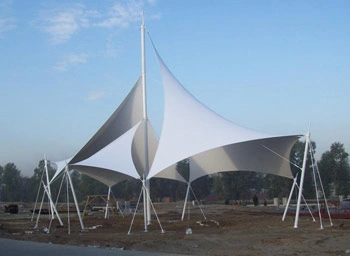
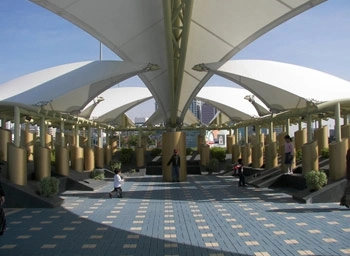
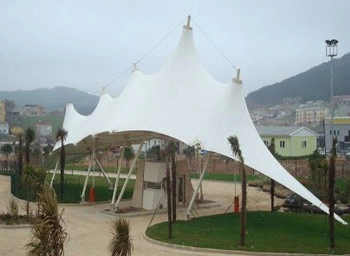
A landmark commercial complex in Whitefield, Bangalore required an architectural membrane structure to cover their central courtyard — a 1,800 sq ft public gathering space between four office towers.
We designed and installed a tensioned PTFE-coated fibreglass membrane spanning between the four buildings using high-strength stainless steel cables. The translucent membrane floods the courtyard with diffused natural light while providing complete rain and UV protection. The installation transformed an underutilised space into the complex's most popular social hub.

Our 4-Step Execution Process
Our specialist membrane engineering team manages every aspect of your project — from structural design to the final tensioned membrane installation.
-
1Structural Feasibility Study: We assess your building, site conditions, and span requirements to determine the optimal membrane system, cable arrangement, and anchor point locations.
-
2Form-Finding & Engineering: Using advanced structural analysis software, our engineers determine the optimal membrane form, cable pretension levels, and structural load paths.
-
3Membrane Fabrication: Membrane panels are precision-patterned using cutting software, cut, and welded using high-frequency welding for airtight, waterproof seams ready for tensioning.
-
4Expert Installation & Tensioning: Our specialist crew installs the cable system, lifts the membrane, and applies precise pre-tension using calibrated jacking systems to achieve perfect membrane form.
Your Questions, Answered
Everything you need to know about tensile membrane structures before making a decision.
Q. What is the difference between PTFE and PVC membrane?
PTFE (Teflon-coated fibreglass) is the premium membrane material used for permanent large-span structures. It is inherently non-combustible, self-cleaning, and carries a 25+ year warranty. PVC-coated fabrics (like Ferrari) are more cost-effective with 5-10 year warranties, suitable for most commercial applications.
Q. Does tensile membrane require planning permission in Bangalore?
Yes, structural roofing systems typically require BBMP/BDA building plan approval in Bangalore. We can assist you with the documentation required for the approval process, including structural drawings, load calculations, and material certificates for submission to the relevant authorities.
Q. How is snow and rain load handled by membrane structures?
Membrane structures are designed with precise drainage slopes to shed water efficiently. The anticlastic (saddle-shaped) form of most tensile membranes naturally prevents water pooling. In Bangalore, we design specifically for the high rainfall intensities experienced during the southwest monsoon.
Q. Can tensile membrane structures be repaired if damaged?
Yes. Small punctures and tears in PVC membranes can be repaired on-site using hot-air welding without removing the structure. For PTFE membranes, individual panels can be replaced without dismantling the entire roof. Our maintenance team can carry out inspections and repairs to extend structure life.
Q. What are the acoustic properties of membrane structures?
Tensile membrane structures offer excellent acoustic characteristics. The curved, tensioned surface diffuses sound rather than creating echoes. For venues requiring enhanced acoustic performance, we can specify fabric membranes with acoustic backing layers to achieve the desired sound environment.
Q. What is the weight of a tensile membrane structure?
Tensile membrane structures are extremely lightweight — typically 1-2 kg/m² for the membrane itself, compared to 50-100+ kg/m² for conventional roofing. This makes them ideal for adding roofing to existing buildings with limited structural capacity, and reduces foundation requirements significantly.